
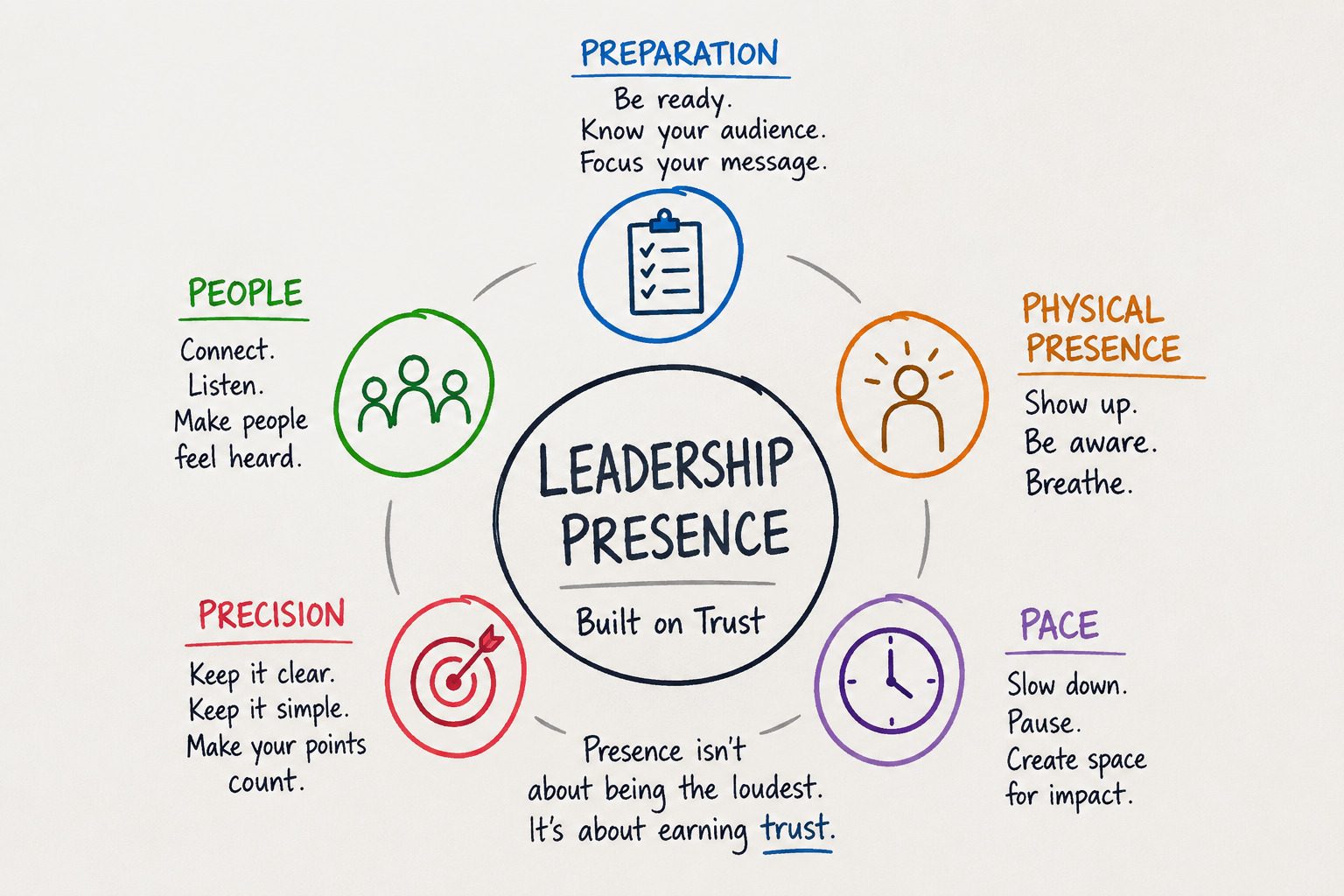
When people hear the phrase “leadership presence,” the image of a charismatic CEO delivering a keynote speech or a politician commanding a debate stage may come to mind.
Many assume leadership presence is something you’re born with. It’s not.
Leadership presence is about how you communicate, connect with people and help others see what’s possible. It doesn’t suddenly appear when you get promoted and isn’t reserved for people at the top of an org chart.

Leadership presence weaves throughout a career
We cultivate leadership presence throughout our careers. Early on, we’re developing our voices. Midcareer, we’re expanding our influence. Later, we’re using that influence to help others succeed.
At every career point, we’re strengthening our leadership presence through dozens of small choices that create one important outcome – trust.
And trust results from connections and relationships we establish by building on our unique strengths and passions to connect with others one small action at a time.
It boils down to “You. Be. You.”
I recently spoke about leadership presence at the annual Connect conference for communicators sponsored by SCPRSA, IABC-SC and AAF Midlands. The session focused specifically on “leadership” presence – not to be confused with “executive” presence.
The distinction matters. Executive presence implies focus on the people at the top. Leadership presence recognizes that people at every career and organizational level can use their perspectives and experiences to make a difference.
Five principals of leadership presence
Over the years, I’ve come to think about leadership presence in terms of five Ps.
1. Preparation: Calm can be preparation in disguise.
There’s no substitute for doing your homework, understanding the landscape and being ready for questions. Also, remember, preparation involves more than knowing your material. Think about your audience. What do you want to tell them versus what do they need to hear?
Practical tips:
- Practice your presentation, meeting pitch, conversation out loud.
- Record yourself.
- Find a trusted colleague who will give you candid feedback.
- Don’t mistake knowing every detail for needing to share every detail at once.
- Know your space. Scope out presentation staging or meeting space in advance.

2. Physical Presence: Be intentional with the space you occupy.
Your body is communicating even when your voice isn’t.
Eye contact, posture, facial expressions, gestures and tone influence how others receive your message. Nervous speakers often talk too quickly or feel compelled to fill every silence.
Practical tips:
- Slow down.
- Be present – put your phone away during meetings.
- Pay attention to what’s happening around you – situational awareness.
- Breathe and pause – don’t fear the “verbal white space.” Square breathing is one way to help you breathe and pause.

3. Precision: Clear beats complicated.
Big words don’t necessarily make you sound smart. Often, they just make your message harder to understand.
Practical tips:
- Choose two or three points you want people to remember.
- Use shorter sentences.
- Cut the jargon.
- Watch for “soft” words like “maybe,” “just” or “I think” that can unintentionally weaken your message.”
- Remember that words matter. “Mistakes were made” lands very differently from “We made mistakes.”
- Focus on “people friendly” language – “use” rather than “utilize” or “learn’ instead of “ascertain.” (Get the full list of people-friendly words at the link to the handout below.)
4. People: Connection builds credibility.
Some of the most important leadership skills have little to do with amassing influence and everything to do with building relationships.
Practical tips
- Remember names.
- Acknowledge concerns even when you disagree.
- Use “we” and “you” more often than “I” and “me.”
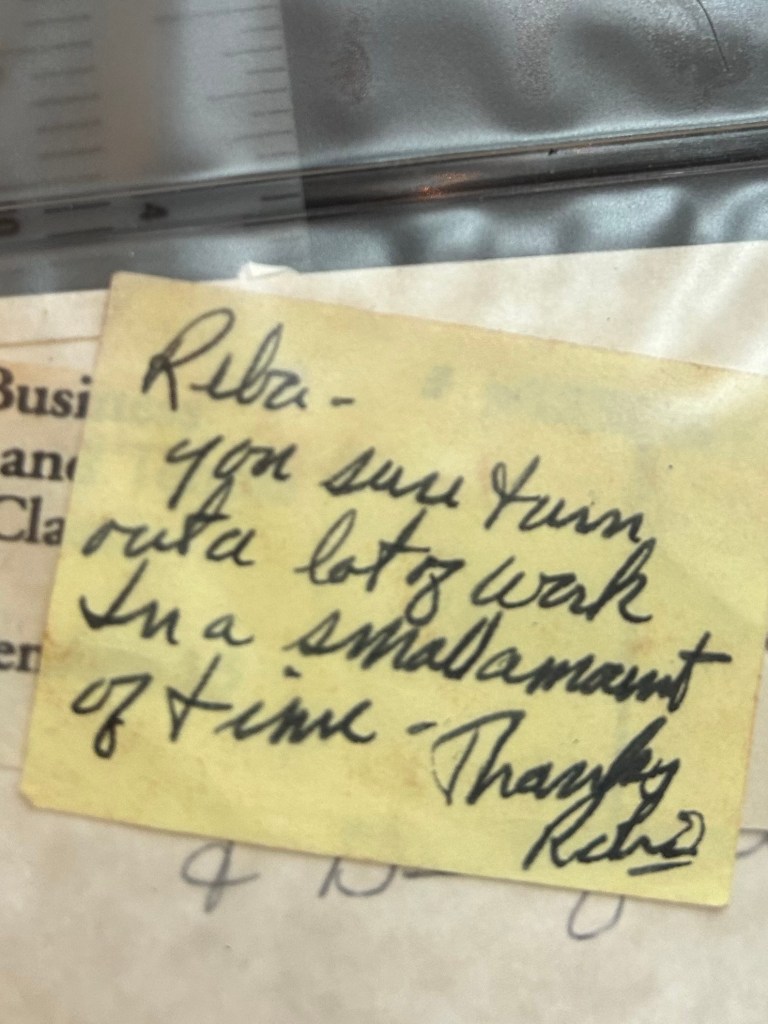
- Never underestimate the value of a handwritten thank-you note.
- Find your boundary spanners – the trusted informal leaders across your organization.
- Give thanks and credit generously. Remember people notice how you treat others.
5. Possibility: Help others see what could be.
Curiosity is an underrated leadership skill. Encourage creativity and opportunity by asking “what if” instead of saying “we’ve always done it this way.”
Practical tips:
- Be willing to learn from someone with less experience.
- Take on challenges that stretch you beyond your job description.
- Use your growing influence to open doors for others.
- Invite new voices into the conversation.
- Let your people shine – someone else’s success doesn’t diminish yours.
Intentional habits are key
The common thread running through these five Ps is authenticity. None of these principals require you to become someone you’re not. Introverts and extroverts, new and seasoned professionals alike can develop leadership presence through intentional habits that help others feel informed, respected and confident.
Know your strengths. Keep learning. Be intentional about how you show up for others.
You. Be. You.
Reba Campbell speaks frequently on leadership topics. Find out more about The Medway Group’s leadership training programs for any size or type of audience. Get a copy of the session handout here that includes more tips and ideas.
You must be logged in to post a comment.