
When people hear the phrase “leadership presence,” the image of a charismatic CEO delivering a keynote speech or a politician commanding a debate stage may come to mind.
Many assume leadership presence is something you’re born with. Others may assume it means being the loudest voice in the room. Neither are true.
Recently, I had the opportunity to work with a group of local government leaders around the topic of leadership presence. We looked at leadership presence through everyday situations they face including staff meetings, council presentations, difficult conversations with residents, legislative testimony, one-on-one staff interactions and media interviews.
Leadership presence is more than charisma of a polished speaker or the loudest voice in the room. Rather, leadership presence is built through dozens of small choices that create one important outcome – trust.
And trust results from connections and relationships.
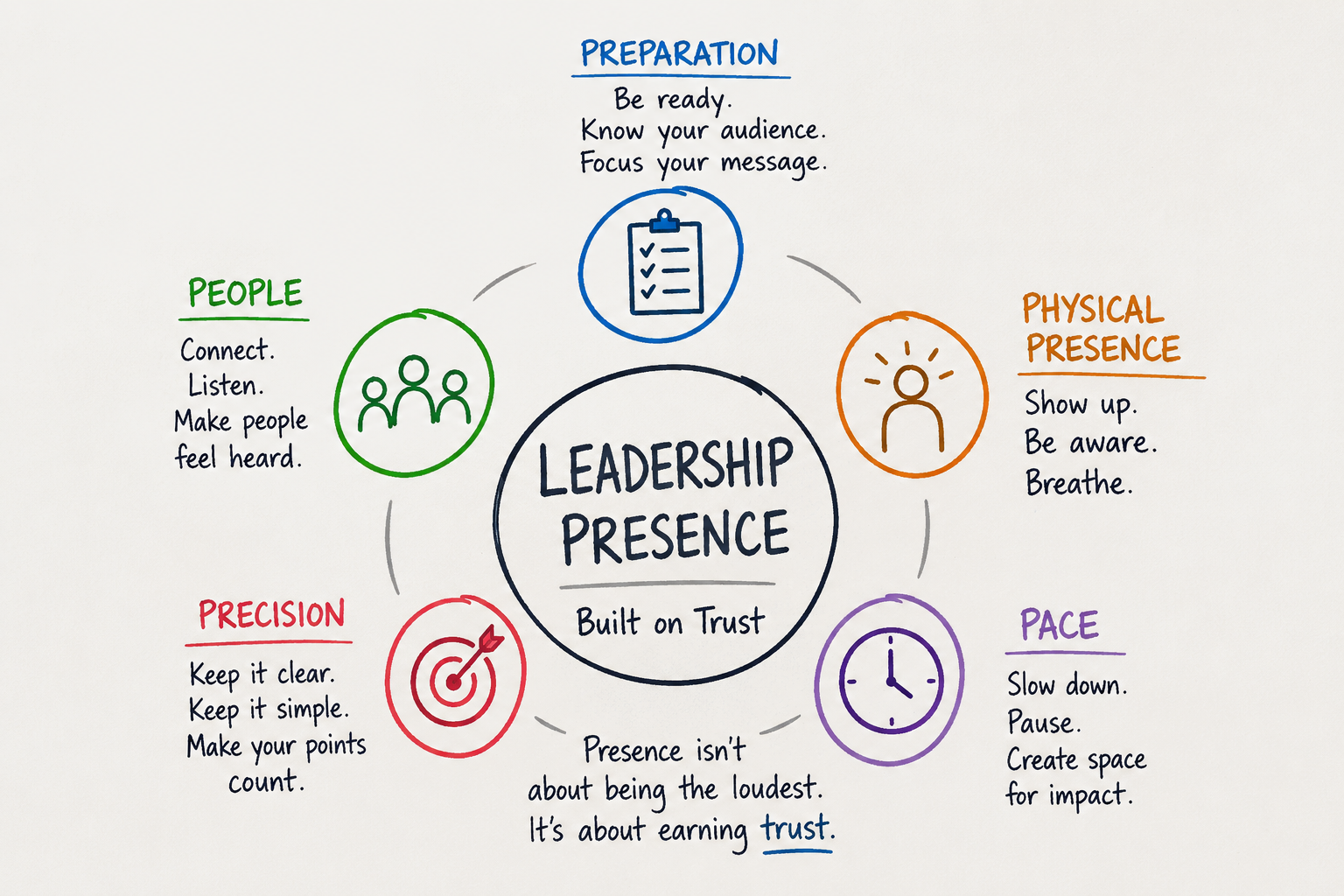
Five principles of leadership presence
Five principles can help leaders and aspiring leaders fine tune their leadership presence.
- Preparation. We often mistake confidence for personality when confidence is often just preparation in disguise. The leaders who appear most comfortable are usually the ones who have anticipated difficult questions, considered their audience and narrowed their message to just two or three key points. They stay on topic. They don’t wing it. They prepare no matter the size of the audience.
- Physical Presence. People begin evaluating a leader before the first sentence is spoken. Posture, eye contact, facial expressions, gestures and even a moment of silence can communicate confidence. One of the simplest techniques is also one of the most overlooked – the act of using your breath. Taking a deliberate breath slows your rushed thinking, lowers tension and helps everyone else in the room focus.
- Pace. Under pressure, many of us speed up. We talk faster, think faster and rush to fill every moment of silence. Effective leaders do the opposite. They slow the conversation, pause before responding and understand why calm is contagious. This is what I call “verbal white space.” It’s often the silence between the words where confidence lives.
- Precision. Clear communication almost always beats complex communication. Too often, professionals rely on jargon, acronyms or overly technical language in an effort to sound knowledgeable. The strongest leaders make complicated ideas understandable. They choose active voice, avoid unnecessary words and remember that clarity builds credibility.
- People. Leadership is fundamentally about relationships. Listening carefully, asking thoughtful questions and acknowledging concerns, even when you disagree, creates trust far more effectively than having the perfect answer or the loudest voice. As the quote often attributed to Maya Angelou reminds us, people may not remember exactly what you said, but they will remember how you made them feel.
Intentional habits are key
None of these principles require someone to become a different person. Introverts and extroverts alike can develop leadership presence. Volume or personality are not the focus. Intentional habits help others feel informed, respected and confident in your leadership.
Whether you’re leading a city department, a nonprofit organization, a business or a project team, leadership presence isn’t a performance. It’s the steady practice of preparing well, communicating clearly and treating people with respect.
Reba Campbell speaks frequently on leadership topics. Find out more about The Medway Group’s leadership training programs for any size or type of audience.