
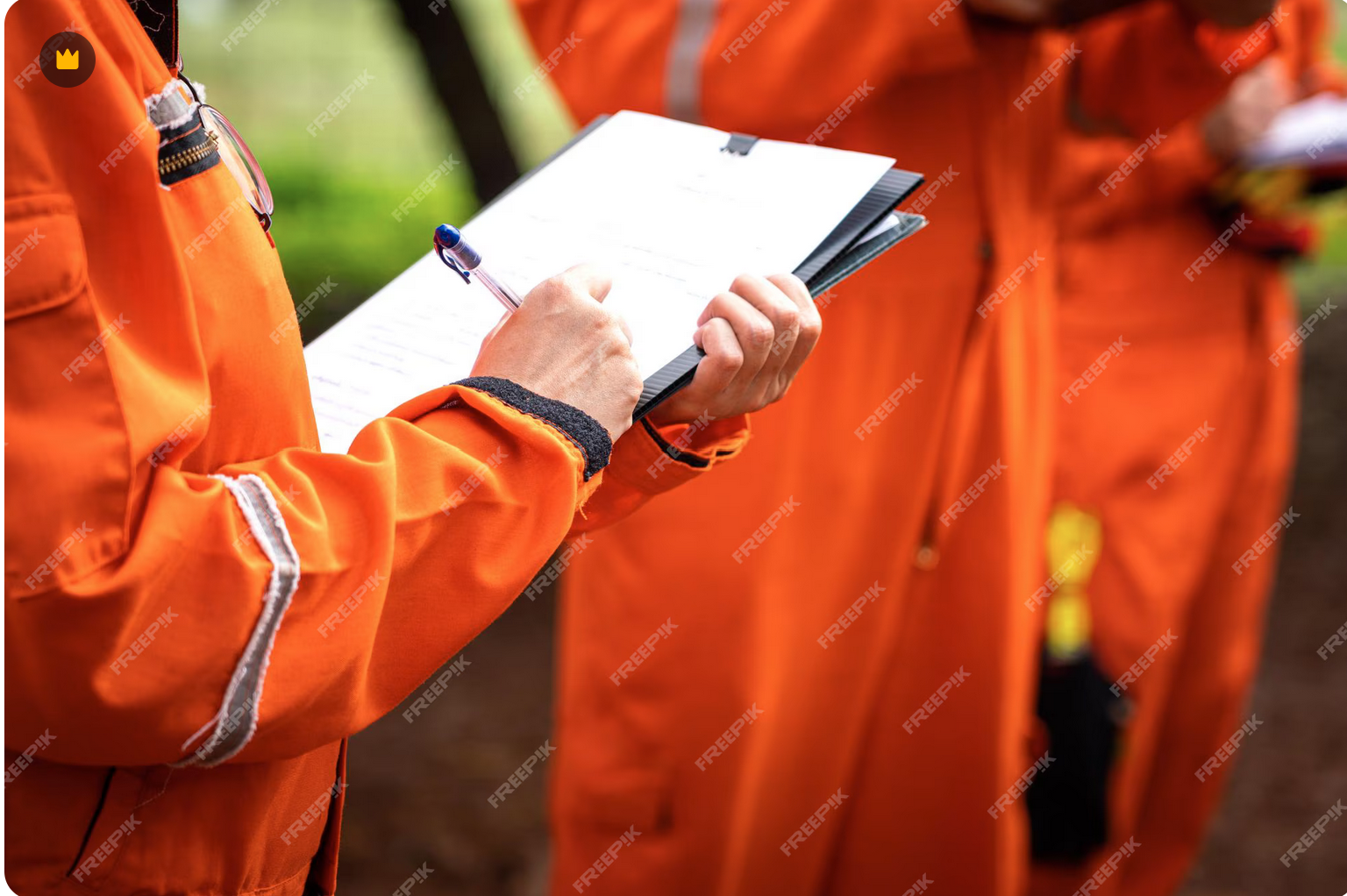
In the midst of a crisis, the primary operational leaders need to have confidence that information is being communicated accurately and rapidly. Preparing organizational leaders for meeting the media BEFORE a crisis strikes takes a dedicated communications lead who has thought through the logistics of dealing with media inquiries and developing accurate messaging.
Even if your organization doesn’t have a dedicated public information officer, a designed communications liaison can take the lead in making sure media inquires, news conferences, staging and messaging are coordinated.
Training for people who will be on the front lines of media briefings can go a long way toward easing nerves and building confidence. The communications liaison can use the checklists here to develop a comms training as part of any Emergency Preparedness Team tabletop exercises.
Part 1 of this article laid out how to plan for communications response in an crisis. Part 2 outlines managing logistical, messaging and content delivery when leaders meet the media during a crisis.
Part 2 – Meeting the media
1 – Establish best practices and agreed-upon approaches with direction from the Emergency Preparedness Team’s organizational leaders.
- Develop media relationships and an accurate media list long before a crisis hits. The SC Press Association may be able to help with media contacts or credentialing.
- Be proactive. In general, it is good policy to release information about the situation as quickly as possible. Comments should be of a general nature until all the facts are in, but then it is far better to get the full story out as soon as possible.
- Value accuracy and truth above all else.
- Answer only the question that’s been asked. No need to supply detail that wasn’t requested.
- Deal with local reporters first if national reporters are on the scene. The locals will still be there long after the national reporters have packed up and left.
- Maintain regular, proactive contact with the media and stakeholders, even if there is nothing new to report.
- Remember the mic is always hot.
2 – Be forthright in your comments, but avoid “no comment” or “off the record.” When the public reads or hears “no comment,” the natural assumption is there’s something to hide. “Off the record” is sometimes misunderstood and misused, so don’t rely on it to protect you. Nothing is ever really off the record anymore.
- Try to have some comment, even if you can’t give the whole story (try using bridging statements in #3 below).
- Be mindful of the need to strike a balance between the competing needs of the public’s right to know, privacy issues and legal issues.
- Remember the mic is always hot.
3 – Identify possible “bridging” statements to keep you focused on your message.
- “I don’t have that information at this time, but what I can tell you right now is …”
- “I can’t address a hypothetical, but what I can tell you at this point is …”
- “Right now, we’re focused on bringing the situation under control, so I’m not going to speculate on the cause of the incident, but what I can share right now is …”
- “Let me put that in perspective by adding …”
- “What’s most important to remember here is ….”
- “That’s an important question, but for now we must be focused on …”
4 – Breathe and use verbal white space.
- Recognize that nerves are normal before speaking in an emergency situation. “Square breathing” can help calm nerves and center the speaker before speaking.
- Four breaths in. Hold for four. Out for four. Hold for four.
- Use “verbal white space” taking a short breath to give you a second to regroup thoughts or slow down an aggressive exchange. Slowing down your verbal pace gives your brain a second to catch up with your mouth.
5 – Maintain a calm and empathetic tone.
- Project empathy and understanding in your messaging, tone and body language to reassure the public and encourage trust.
- Avoid “thoughts and prayers” as this phrasing often sounds trite and insincere. Options to consider include:
- “Our hearts are with those affected.”
- “We stand with everyone in the community affected by this situation.”
- “Support is available during this difficult time.”
- This tragic event is deeply saddening.”
- Avoid “thoughts and prayers” as this phrasing often sounds trite and insincere. Options to consider include:
- Use active voice statements whenever possible. Passive voice often implies an official is attempting distance from the situation or avoiding accountability.
- Instead of “Mistakes were made.” Try “We made mistakes.”
- Instead of “The situation will be resolved.” Try “We are working to resolve the situation promptly.”
6 – Use people-friendly language.
- Avoid jargon, acronyms and insider baseball language.
- Provide background on the situation even if it seems obvious (locations, names, spelling, etc.)
- Avoid using negative statements. Instead of stating what you didn’t do, flip it to say what you did do.
- Instead of “The county did nothing wrong in evaluating the risk of a water line break.” Try “The county followed all safety protocols in evaluating the risk of a water line break.”
- Mirror questions back.
- Instead of answering the question “What color is the sky” with “blue,” respond with “the sky is blue.” This helps a reporter with editing and ensures clarity of your response.
- Talk in soundbite sized phrasing. Reporters and editors will thank you for this one. No need to answer more than the question asked.
7 – Dress the part. No one thinks about what to wear in a crisis scenario. Think about this in advance. Consider storing “TV clothes” at the office for emergency television appearances.
- Consider branded clothes, if appropriate. Think through the optics of various types of clothes (EX: uniforms, windbreaker, polo shirt, tie, suit, etc.).
- Avoid shiny badges or jewelry that can catch light.
- Avoid loud, jangly jewelry/accessories that can make annoying sounds.
- Be mindful of long hair that can brush a lavaliere mic.
- Consider where to clip a mic battery if using a lavaliere mic.
- Pay attention to body language.
8 – Understand (and control to the degree possible) staging of media event
- Lighting
- Determine if the stage space can be adequately lit for television
- Check for whether lighting accounts for natural light and how will change as the day goes on
- Check background/backdrop for reflections or bouncing light.
- Audio
- Provide mult box (sometimes called a press box) that allows multiple reporters to plug phones/recorders into a single source and a flat lectern top for mic stands. A quality mult box is a good investment for any organization that may need to host media events.
- Listen for ambient sound like fans or outside noise that can be controlled.
- Provide quality microphones, speakers, and windscreen to cut down on wind noise and reduce “popping” sounds. These can be a good investment for any organization that may need to host media events.
- Check to ensure a lectern mic can be adjusted for people of various heights.
- Remember the mic is always hot.
- Stage size
- Size
- Seated or standing
- Stage height
- Lectern
- Height and width
- Shelf
- Light
- Flat top for mic stand
- Other considerations
- Handicap access
- Deaf/other language interpreter
- Captioning
- Handheld mic to take questions
- Nice-to-haves
- Branded mic flag
- Pop-up banner
- “Step and repeat” banner
BONUS: The spreadsheets mentioned in parts 1 and 2 are available for download here. They are in Excel and can easily be adapted and customized for any organization that is doing the prep work for managing communications in an emergency. Got questions? Contact us at the Medway Group.